(239) 301-8913 Departing Marco Island & Naples, FL
⚓ USCG Licensed & Insured 4.9★ from 2,000+ guest reviews — read them on Google & Tripadvisor
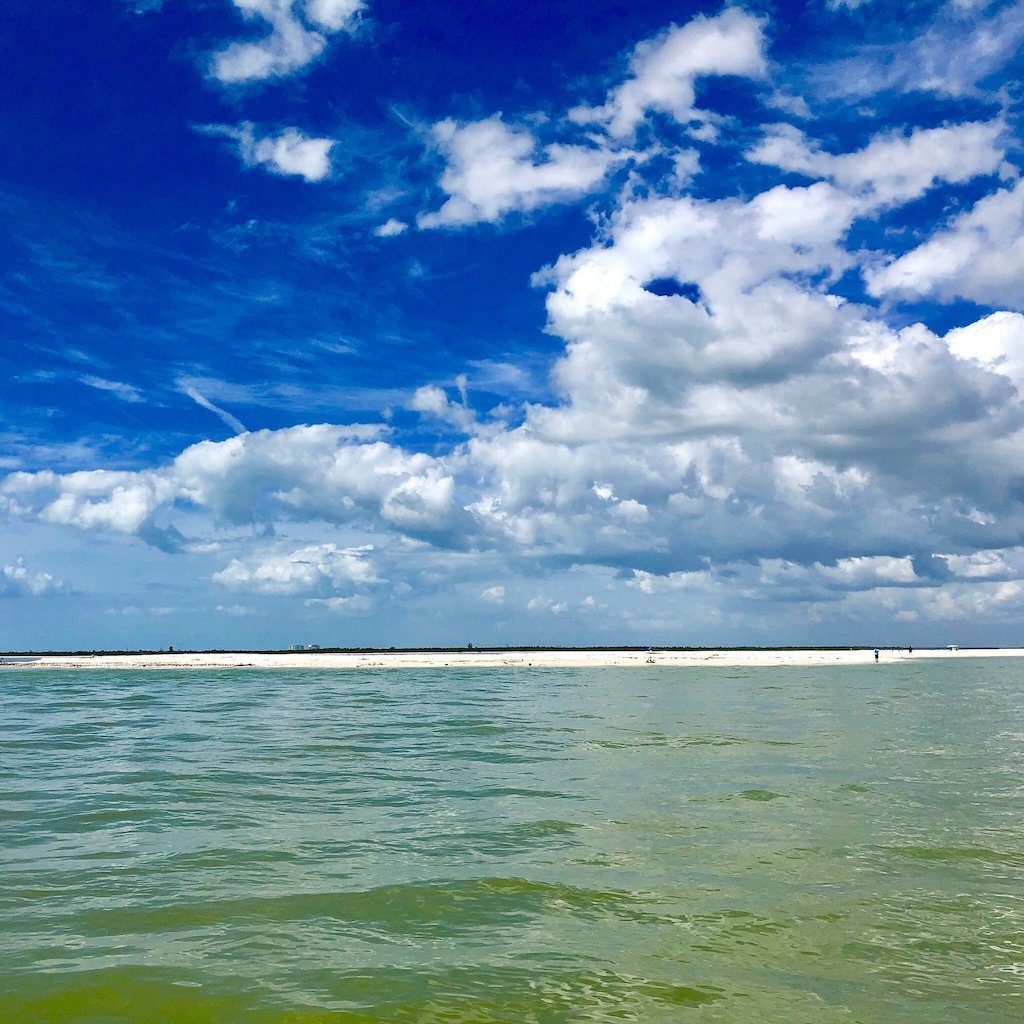
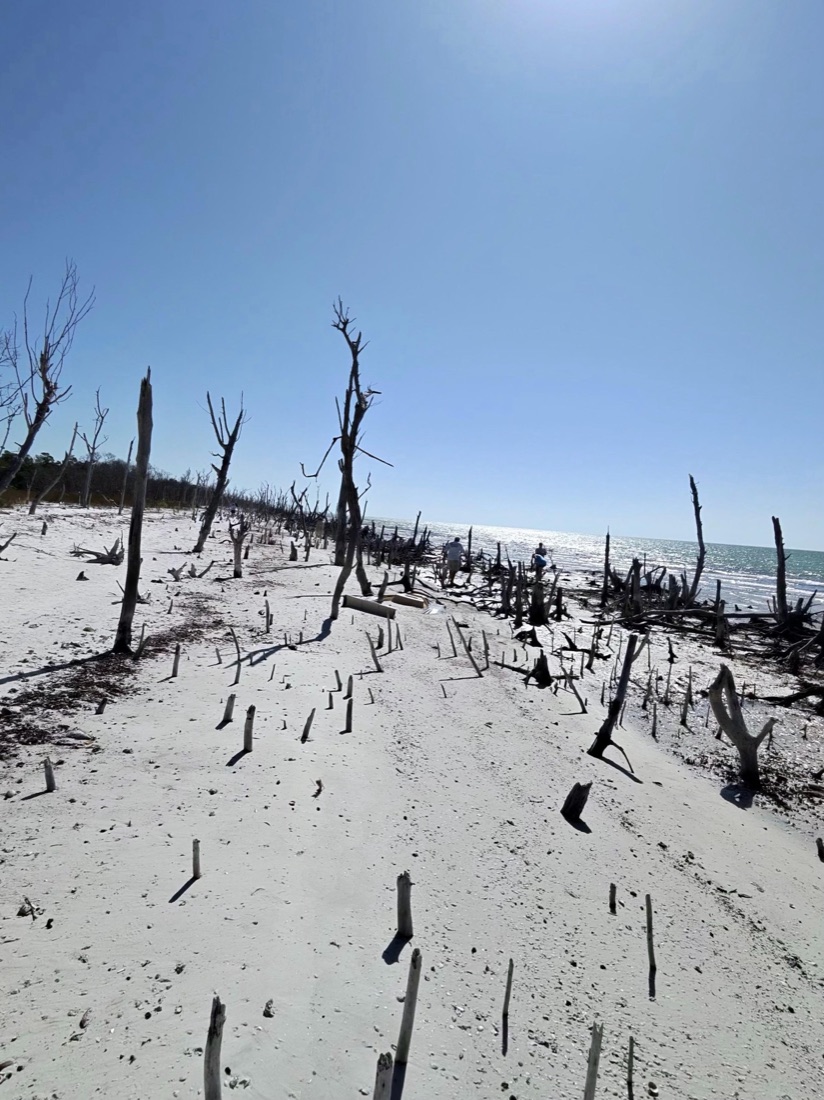
A wild, undeveloped barrier-island beach and shallow green water in the Ten Thousand Islands off Marco Island, Florida

Day Trips

A Day Trip from Tampa to the Ten Thousand Islands

You already live on a serious estuary, so the case for this drive isn’t prettier water — it’s a different ecosystem: a roadless chain of mangrove keys with nothing built on them, at the corner where the Everglades meets the Gulf. Straight down I-75, that’s 2 hours 55 to 3 hours 30 to our Goodland dock, where the shelling and island trips leave, or 2 hours 20 to 2 hours 55 to our Naples dock.

  • San Marco Marina, Goodland
  • 2 hr 55 – 3 hr 30 to Goodland
  • All ages welcome
  • USCG Master Captains
Drive to Goodland2 hr 55 – 3 hr 30 from Tampa (Naples dock: 2 hr 20 – 2 hr 55)
Departure marinaSan Marco Marina — 604 E Palm Ave, Goodland, FL 34140
Waterthe Ten Thousand Islands — mangrove keys, tidal passes, oyster bars
You may seedolphins, spoonbills, ospreys, winter white pelicans — wild, never promised

Different Water

Why the water down here is a different thing entirely

Tampa Bay is the largest open-water estuary in Florida and a genuinely good one — mangrove shoreline, seagrass, wild dolphins working it every day. It is also a bay that works for a living, with a deep-water port, dredged shipping channels and bridges long enough to be landmarks. The water at the far end of I-75 is not a prettier version of that. It is a different category of place: an archipelago of low mangrove keys that the trees themselves built, undeveloped, unbridged, sitting exactly where the Everglades finishes draining into the Gulf. The case for this drive is ecological, not scenic. You are going to see a system, and there is no road into it.

Here is the part that decides your morning: which dock your trip leaves from. It is straight down I-75 either way. Naples Bay Resort & Marina, at 1500 5th Avenue South, runs about 2 hours 20 to 2 hours 55 from Tampa. San Marco Marina in Goodland sits another 30 to 40 minutes further southeast, past Naples and out on the tip of Marco Island, so figure 2 hours 55 to 3 hours 30. The shelling runs and island landings — the reason most people make this drive — leave from Goodland. Season, roughly November through April, stretches every one of those figures, so check your own map app the morning you travel and pad it.

Two things follow from that. Shelling departures are set by the tide rather than by what suits your calendar, so book the trip, take the time you are given, and work the drive backwards from it — not the other way around. And do the round-trip arithmetic before you fall for a sunset cruise: golden hour on the water plus three hours of interstate gets you home late, and staying the night is the better call if evening light is the whole point. A morning or midday trip, by contrast, is a straightforward day out and back. The day-trips hub covers what each of these islands is, so we will not repeat it here.

  • Goodland is 30–40 minutes past Naples — and the island trips leave from Goodland
  • Straight down I-75; season, roughly November–April, stretches every figure
  • The tide sets the shelling departure, so book before you plan the drive
  • Morning trips work as a day trip; for sunset, stay over
Check Availability

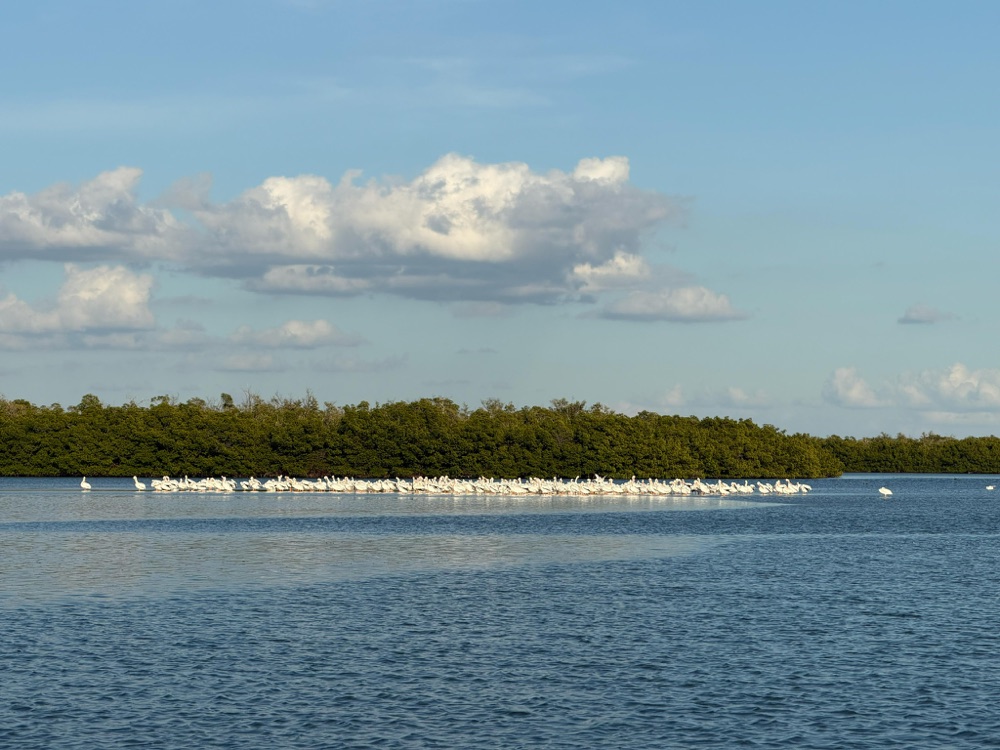
A long raft of white pelicans resting on the water along a green mangrove shoreline in the Ten Thousand Islands, Florida
White pelicans along a mangrove bank — no road within miles of it

The Place, Explained

What actually sits at the end of I-75

Six things about this ecosystem, in the order they built one another — finishing at the dock you drive to.

01

The islands are built by trees, not by sand

Start with the odd fact that explains all the others: most of these keys are not sand bars with plants growing on them. They are made by the plants. A red mangrove drops a floating seedling, it grounds on a shallow spot, and its prop roots begin catching leaf litter, silt and broken shell. Black mangroves move in behind, pushing thousands of little snorkel roots up through the mud to breathe. White mangroves take the higher, drier ground. Give that process a few centuries and you have an island. The stand that runs from these keys down through the Everglades is the largest continuous mangrove forest in the Western Hemisphere. It is also why the shoreline looks unfamiliar from the boat: no seawall, no rip-rap, no straight lines anywhere, just green wall and dark water underneath.

02

Underneath all of it is a nursery

Those tangled roots are why this water holds fish the way it does. Mangrove leaves drop, break down, and feed a chain that starts with bacteria and shrimp-sized things and ends with whatever is hunting them. In between, the root maze is cover: juvenile snook, tarpon, redfish, snapper and sheepshead spend their first stretch of life in there, out of reach of anything big enough to eat them. Add the oyster bars — hard, sharp reefs that surface at low water and vanish again on the flood — and there is structure absolutely everywhere, which is why our backwater fishing charters work creeks and bars rather than open water. Our vessel license covers every paying guest aboard, so nobody buys their own. Tarpon here is catch-and-release only, and snook is regulated and seasonal.

03

The birds follow the nursery

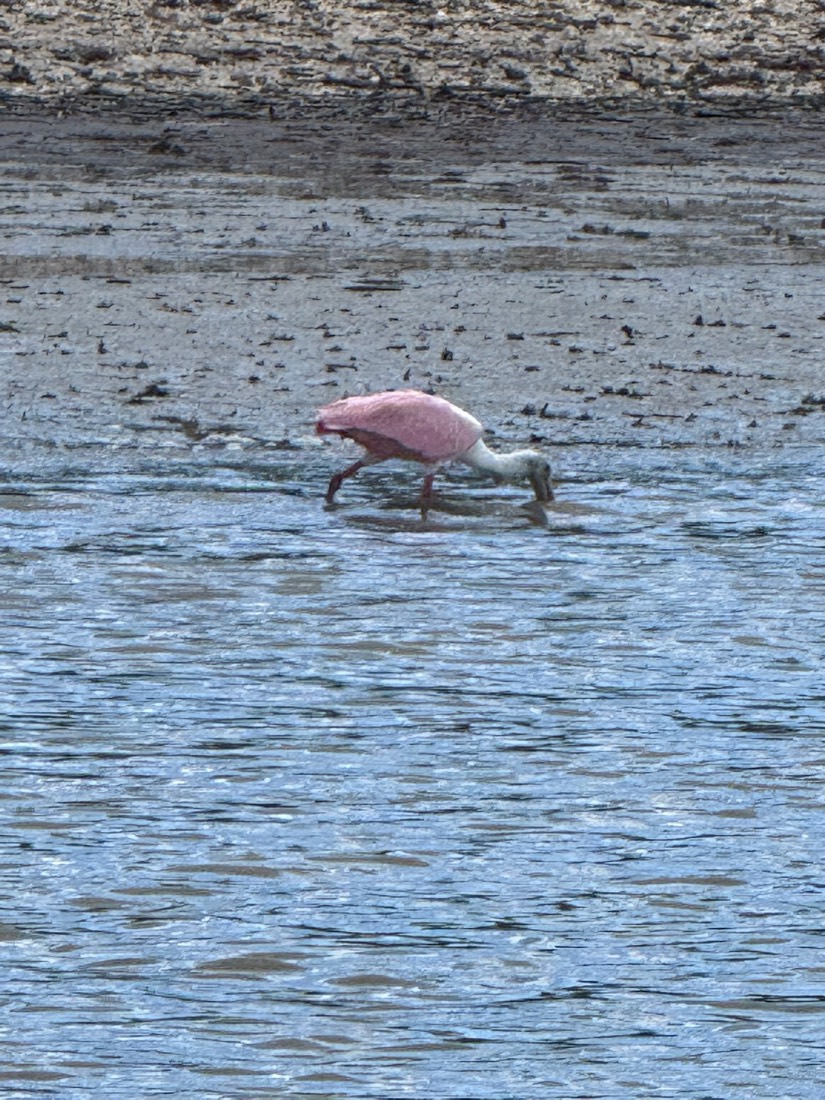
Wading birds are the visible result of all that protein. Roseate spoonbills work the flats with their bills half-open, sweeping side to side and snapping shut the instant something touches — they hunt by feel rather than by sight, which is why they favor thin, tannin-stained water like this. Herons, egrets, ibis and wood storks work the same edges. In the cool months American white pelicans turn up in long rafts along the mangrove banks; unlike the brown pelicans that plunge-dive here all year, they herd fish at the surface and scoop, and they leave again in spring. Some of these keys are rookeries, because birds nest on islands specifically to keep land predators off. We give those a wide berth: a colony flushed off the branches loses eggs, and no photograph is worth that.

04

The big animals, and what we will not promise

Bottlenose dolphins live in this water year-round rather than passing through, and they show up on most trips — often close alongside, working a pass or riding the wake — but they are wild and they keep their own hours, so we will never tell you that you will see one. How dolphins use this water is a good read before you come. Manatees are a cold-months thing: once the Gulf drops below roughly 68 degrees, about November through March, they move into warmer backwater, though out here they are scattered through the estuary rather than stacked into one spring the way they are further north. Loggerheads nest on these beaches May into October. It is a real ecosystem, not a stocked one, and it behaves like one.

05

Why the shells are different, and why the tide runs the clock

Shelling out here is not better because the Gulf is more generous. It is different because of who else is on the beach, which is nobody. No road reaches these islands, so there is no morning crowd, no rake, no grooming and no footprints ahead of you. The chain also knocks the energy out of the surf, so shells come ashore on the down-current ends and bars whole instead of ground into hash. What is lying there shifts with the tide and the last front, which is exactly why every run departs on low water. The rules travel with you: Collier County is empty shells only, nothing alive, and Florida’s state shell is the horse conch. A junonia is a deep-water storm-wash find and a real holy grail: luck, never an itinerary item. Where the shells actually collect has the rest.

06

And why none of it is drivable — which is where you park

Here is the part a map does not make obvious. Between Goodland and Everglades City, roughly thirty-five miles of coastline, not one road touches the water; US-41 runs well inland of all of it. Nothing was ever built out to these keys, and that single fact is why the place still looks the way it does. It is also why your drive ends at a dock instead of a parking lot with a beach behind it. Ours is San Marco Marina, 604 E Palm Avenue in Goodland — a small working fishing village on the southeast tip of Marco Island, not a resort strip. Type that address into your map app, never the town name, and give yourself twenty minutes in the lot before departure. Naples trips board at our other slip on Naples Bay.

Who It Suits

Who makes this drive and never regrets it

Four kinds of reader for whom this particular water pays back three hours of I-75.

A birder keeping a list

Spoonbills, wood storks, ospreys and winter white pelicans, along shoreline nobody has ever built on.

A shell collector

Unraked island tidelines, tide-timed departures, and an empty-shells-only rule you will be glad about.

A family with an animal kid

No glass, no soundtrack, no queue — wild animals doing ordinary things a few feet away.

An angler used to open bay water

Mangrove creeks, oyster bars and root edges instead of channels: different structure, different fish.

Out There

The water you cannot drive to

A wild shell beach, a spoonbill working a flat, and the island chain from the waterline.

A wild, undeveloped shell beach in the Ten Thousand Islands near Marco Island, Florida, with shells scattered across wet sand
No road, no rake, no footprints ahead of you
A roseate spoonbill feeding in shallow water on a tidal flat in Southwest Florida
Spoonbills hunt by feel, sweeping the shallows
A wide view of undeveloped barrier-island beach and shallow green water in the Ten Thousand Islands, Florida
Mangrove keys and shallows — all of it boat-only

Good to Know

Driving down from Tampa, answered straight

The docks, the road, the tide, and the things we refuse to guarantee.

How long is the drive from Tampa, and which dock am I driving to?

Straight down I-75, and the number depends on the trip. Our Naples dock, Naples Bay Resort & Marina at 1500 5th Avenue South, runs about 2 hours 20 to 2 hours 55. San Marco Marina in Goodland sits another 30 to 40 minutes past Naples, so plan on 2 hours 55 to 3 hours 30. Shelling and island landings depart Goodland, so most people reading this want the longer figure. Season, roughly November through April, adds to both, and one bad stretch of interstate adds more. Check your own map app the morning you leave and build in a buffer — our boats go on the tide, which does not wait.

Can we just drive to one of these islands instead?

You cannot, and that is the trip rather than an inconvenience. Keewaydin, Kice and Cape Romano are boat access only, and so is every key beyond them; between Goodland and Everglades City the coast has no road on it at all. If you could park at these beaches they would look like every other drivable Florida beach inside a few years, which is precisely why they still look like this. A boat is not the scenic way in — it is the only way in. The Ten Thousand Islands guide walks through what is out there, key by key.

We already get out on the water at home. What is actually different?

Continuity, mostly. It is not that our water is prettier — it is that this stretch of mangrove coast runs unbroken with nothing built on it, no seawall anywhere and no road reaching it from either end. That changes what you see rather than how it looks: shorelines that are green wall instead of houses, birds that never learned to expect people, tidelines with nobody’s footprints on them, and a nursery system feeding straight into the Gulf at the Everglades’ western edge. Rookery Bay Reserve is the protected front door to it, and the island chain runs south from there.

Will we definitely see dolphins, spoonbills or manatees?

No, and be wary of anyone who tells you otherwise. Bottlenose dolphins are here all year and turn up on most trips. Spoonbills and other wading birds are common on the flats. Manatees are a cool-season proposition and are spread thin through the backwater rather than bunched into one warm spring. Every one of them is a wild animal keeping its own calendar. What we can promise is that you will be in the water they actually use, with a captain who knows which banks and passes have been producing lately and will name whatever surfaces.

Why is the shelling departure time so specific?

Because the tide sets it and we do not. Shelling runs are built around low water, when the bars and tidelines are exposed and walkable, and low tide slides through the calendar all year — winter brings morning negative lows, summer brings evening ones. There is no off season for it. On a three-hour drive that matters enormously: book the trip first, get your departure time, then work the road backwards from it. Shelling starts at $125 per adult and $90 per child. If the time you are offered will not work for your day, call (239) 301-8913 and a captain will find you a date that does.

Day trip or overnight from Tampa?

A morning or midday trip is a genuine day trip — you leave at a civilized hour and you are home for a normal evening. Sunset is the one to think twice about: the cruise ends after dark and three hours of interstate still sit between you and home, which lands you back late in winter and considerably later in summer. If evening light is the whole reason you are coming, book a room and drive back in daylight instead. We are not a hotel and we gain nothing by saying that. Boat tours near where you are staying lists the areas around both docks, though we are not affiliated with any property.

Reserve Your Seats

Ready to point the car south?

Check availability, lock in a departure time, and build the drive around it rather than the reverse.

Or call (239) 301-8913

Three Hours, One Archipelago

Book your Ten Thousand Islands trip

Shelling runs, island landings, dolphin cruises and backwater fishing, all out of San Marco Marina in Goodland — roughly 2 hours 55 to 3 hours 30 from Tampa down I-75. Take a morning slot, or call (239) 301-8913 and a captain will build the day around the tide.

← All day trips

Proud member, Greater Naples Chamber of Commerce · Listed with VISIT FLORIDA, Paradise Coast CVB, Visit Marco Island & Visit Naples

Book Now